Analyzing the Private Rental Housing Market in Shanghai with Open Data
Land Use Policy · 2019
Contribution
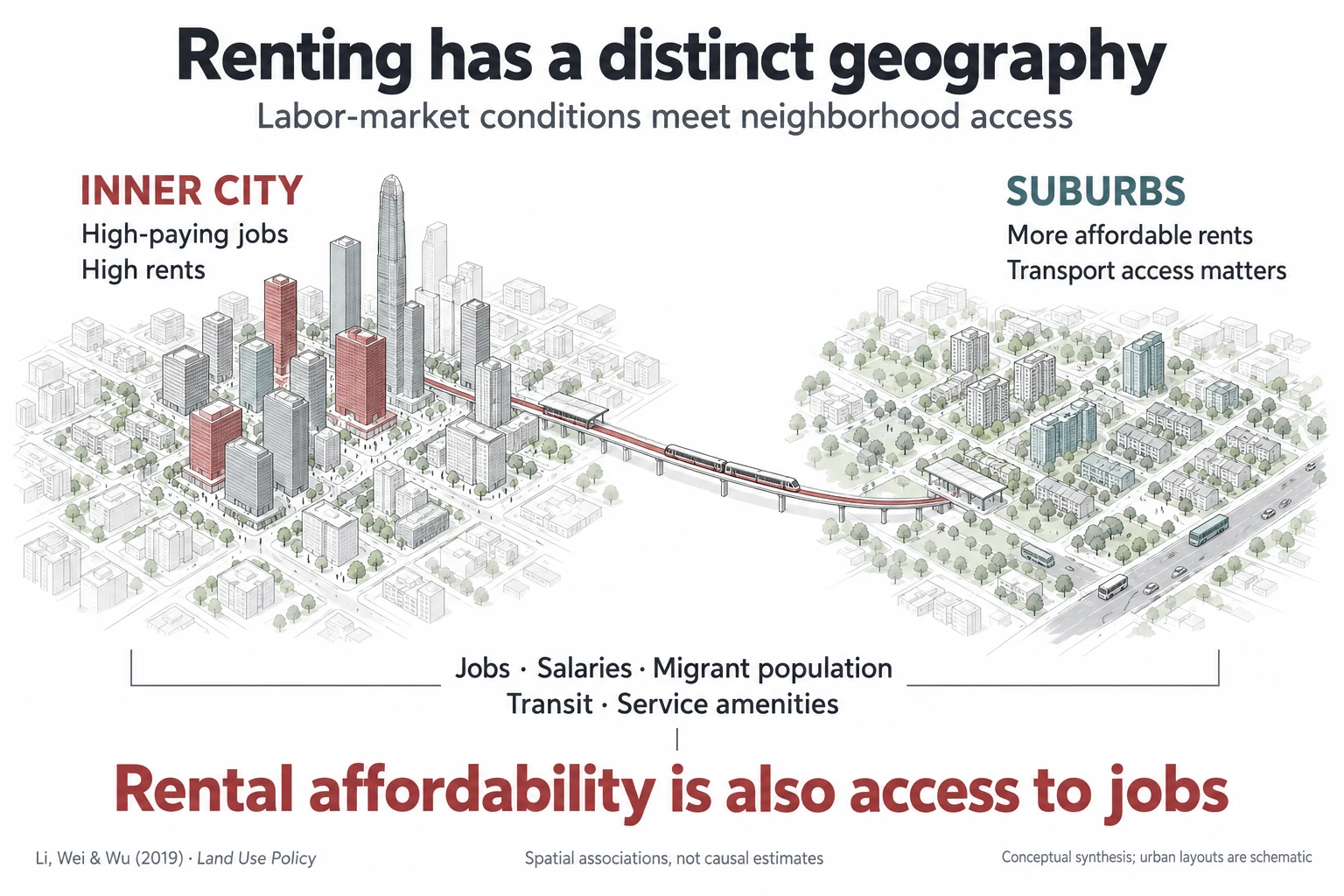
The rental market cannot be treated as a simple extension of the sales market. The study brings jobs, salaries and migrant population together with neighborhood transport and service amenities to explain spatially varying rent associations in Shanghai. It connects rental affordability with employment accessibility: less expensive places to live do not necessarily offer convenient access to high-paying jobs.
Findings and approach
- The analysis integrates 33,428 rental listings with labor-market and amenity data, distinguishing regional, neighborhood and dwelling-level conditions.
- High-paying jobs and high rents are concentrated in central areas; suburban rents are relatively affordable, with transport and shopping access particularly relevant to rental values.
- Migrant-population associations vary across urban zones. The discussion of rent, commuting burdens and institutional restrictions does not constitute measured individual commuting trajectories or causal effects.