
UTSI RESEARCH GROUP · WUHAN UNIVERSITY
Urban Transformationand Spatial Inequality
We study how urban transformation reshapes the geography of jobs, housing and public resources, and how these changes distribute opportunities across places and people.
Led by Associate Professor Yangyi Wu · School of Urban Design
Yezhihu, Wuhan · 2019Arnie97 / CC BY-SA 4.0 · Cropped for layout


Principal investigator
Yangyi Wu
Associate Professor · Department of Urban Planning
School of Urban Design, Wuhan University
The UTSI Research Group studies urban transformation from a geospatial perspective, focusing on how industrial restructuring, migration and public investment reshape firm locations, housing markets and the use of public facilities, and redistribute opportunities across places and social groups.
Our research combines quantitative and qualitative methods, drawing on spatial data analysis, surveys and interviews to connect urban spatial patterns with residents' everyday experiences and explain the mechanisms behind these differences.
Research framework
Framework and methodsHow do cities respond to economic and industrial change?
How economic change, firm location and urban amenities jointly shape local development — and why similar transformations follow different paths in different cities.
Explore urban transformationHow does urban change reorganize space?
How employment, housing and daily activities redistribute within cities. Morphological concentration, functional connection and residents' activity spaces are three distinct layers of structure.
Explore spatial restructuringHow are the opportunities created by urban development distributed across space?
How access to urban resources differs across places and social groups. We ask both where resources are located and who can use them, how they are used, and whose needs are met.
Explore spatial inequalityResearch highlights
All publicationsLandscape and Urban Planning · 2025 · First author
Park equity through access, needs and use
Park distribution alone does not capture equity. In Salt Lake City, southern peri-urban residents perceived better access than spatial measures suggested, while western communities faced greater quality deficits. Comparing spatial indicators, residents' perceptions and pandemic-era use connects equity assessment to lived experience and improvement needs.
Read the research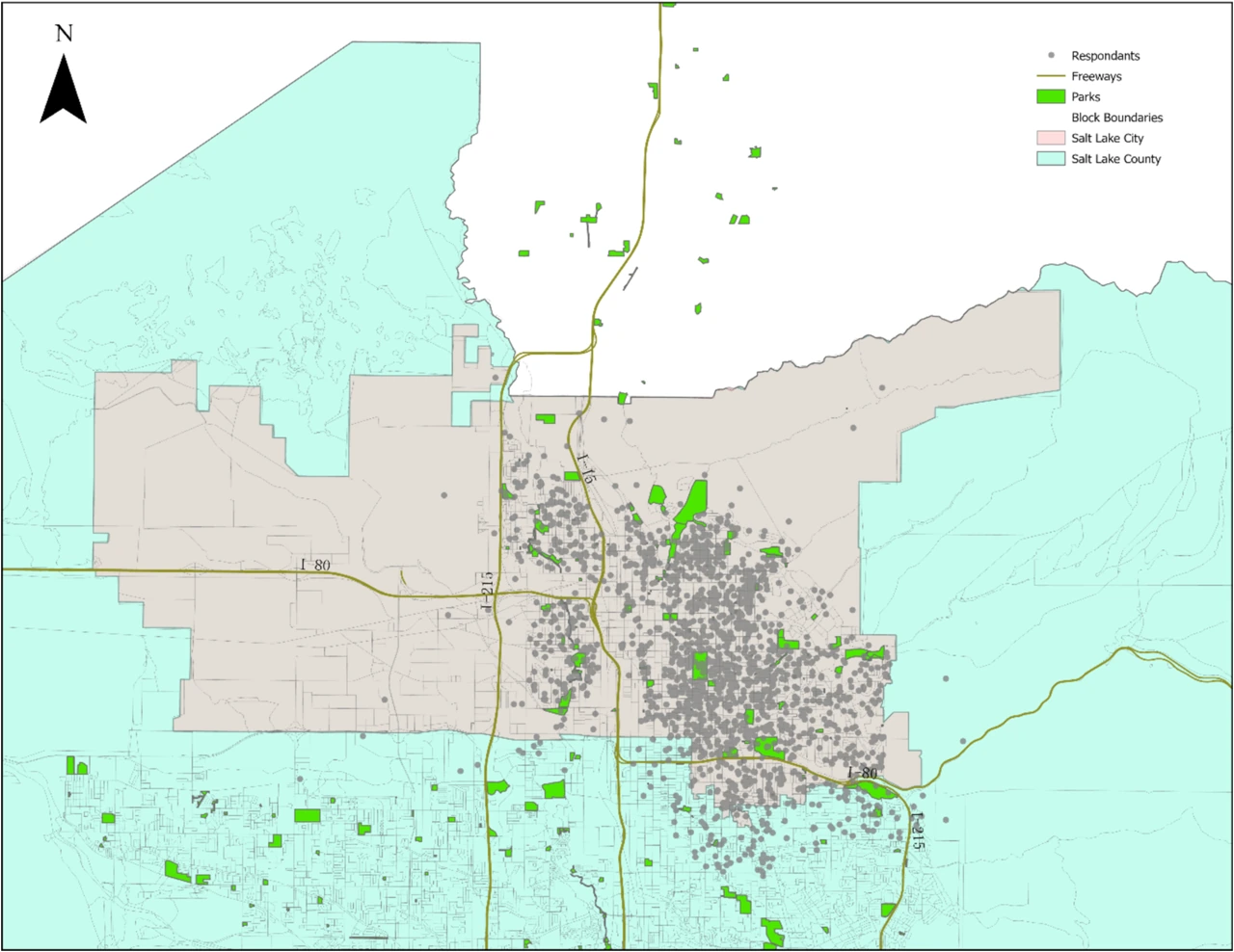
Applied Geography · 2025 · Co-corresponding author
Industry location across metropolitan and local scales
Industry location reflects both metropolitan patterns and local conditions. Research on Wuhan's automotive industry finds that metropolitan amenities shape competitive advantage, while local availability and diversity support clustering. Infrastructure and public services have more consistent effects, pointing to different priorities for central and peripheral areas.
Read the research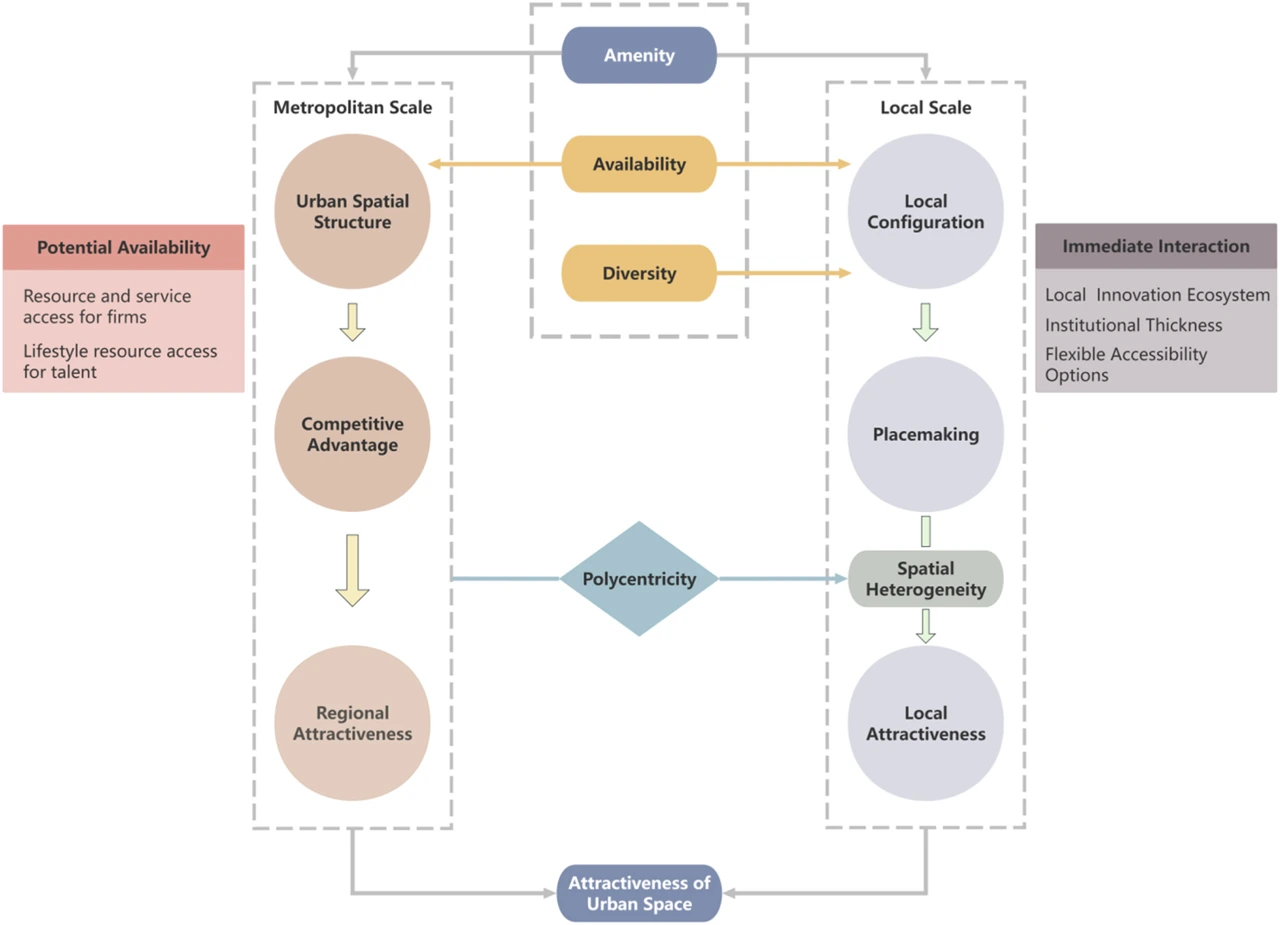
News
All news- Served as session chair at the 20th IACP Annual Conference
- Co-convened a session on metropolitan spatial governance in the digital age
- Greater Bay Area urban form and politico-economic transition study in Land Use Policy
- Urban Sprawl chapter published in The Encyclopedia of Human Geography
- Co-chaired the conference session on emerging technologies and economic geography
- Co-chaired the conference session on big data-driven urban spatial transformation
Students and collaboration
We welcome students and colleagues interested in urban and economic geography, planning and spatial analysis. Get in touch about research, admissions or collaboration.
2027 entry: Master’s students in Design and in Urban and Rural Planning.
PhD recruitment is expected from 2028, subject to the university's admissions announcements.