Green Infrastructure Inequality in the Context of COVID-19: Taking Parks and Trails as Examples
Urban Forestry & Urban Greening · 2023 · First author
Contribution
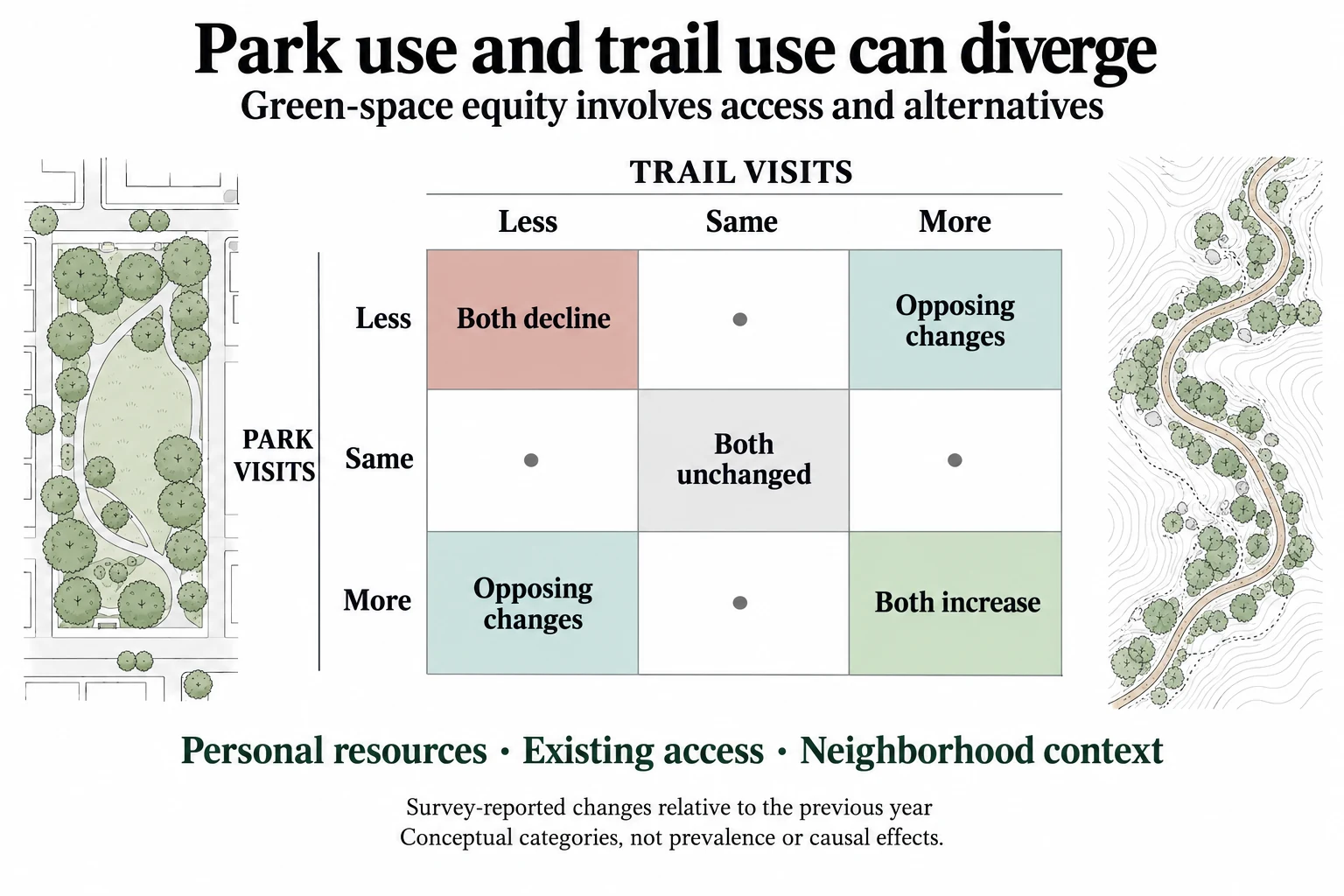
Green-infrastructure equity concerns alternatives as well as proximity. Jointly analyzing nine combinations of pandemic-era park and trail visit changes, the study identifies both complementary and opposing responses. These patterns are associated with personal resources, existing access and neighborhood conditions, showing why a single linear increase-or-decrease measure can miss important dimensions of inequality.
Findings and approach
- Joint reductions and shifts toward an alternative green space represent different situations, not positions on one simple ordinal scale.
- Wealthier respondents have more alternatives; some older respondents report fewer visits without a compensating increase in another type of green space.
- Respondents reporting fewer visits live in neighborhoods with higher infection levels; the survey does not causally identify demand, infection or behavioral responses.