Urban Equity of Park Use in Peri-Urban Areas during the COVID-19 Pandemic
Landscape and Urban Planning · 2025 · First author
Contribution
Objective accessibility and quality measures alone cannot fully describe park equity. Comparing urban and peri-urban communities, the study connects resource assessments, residents' perceptions, improvement needs and pandemic-era changes in use. It shows why measured provision can diverge from experienced services, leaving peri-urban vulnerabilities insufficiently understood.
Findings and approach
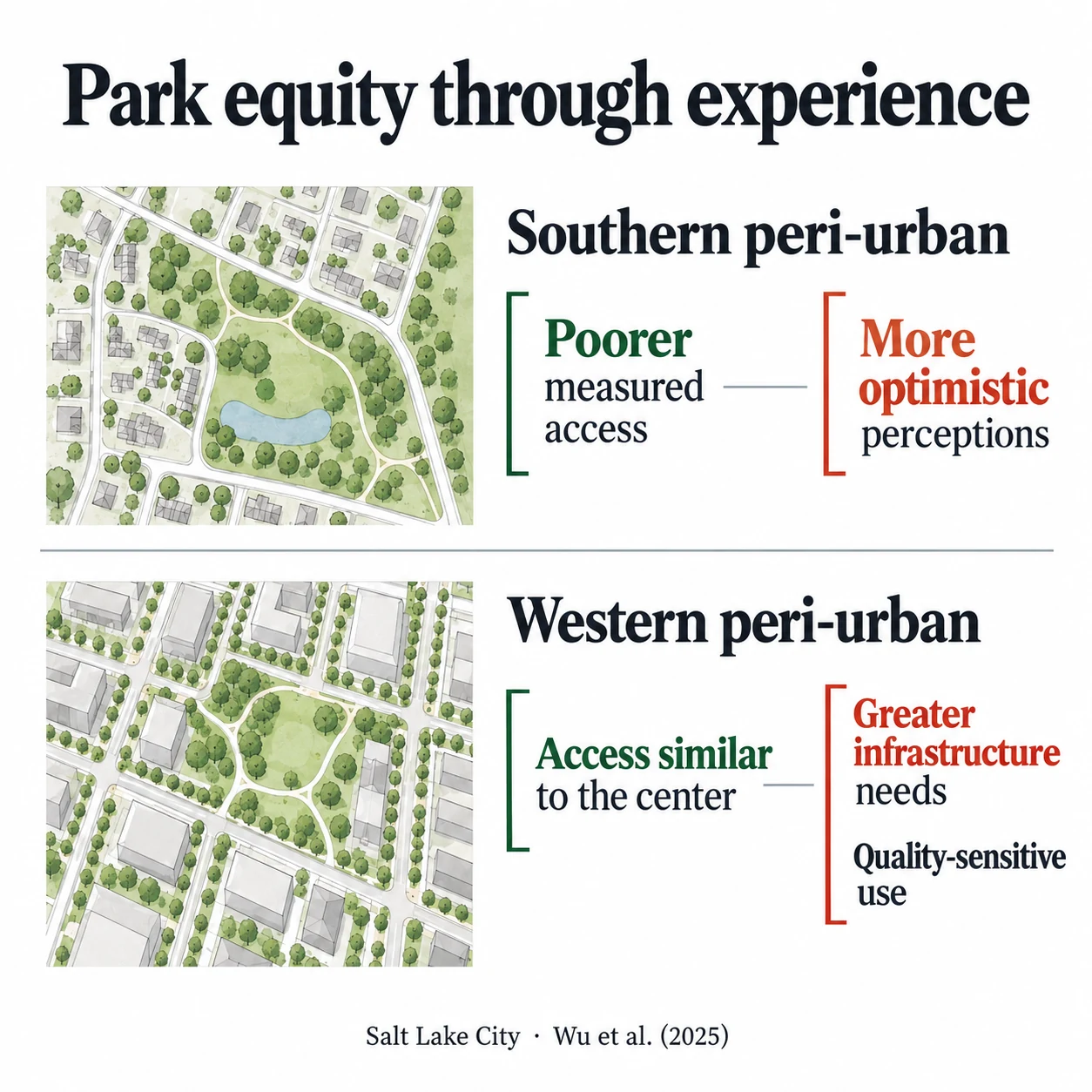
- In Salt Lake City, southern peri-urban residents perceive accessibility more positively than conventional spatial measures suggest.
- Urban-center and western peri-urban communities have similar objective accessibility but different perceptions; park quality also shows a marked east-west divide.
- Western communities report greater needs for basic infrastructure improvements, and their pandemic-era park use is more vulnerable to perceived quality problems.